India’s Commercial Vehicle Growth in March 2026 & FY 2026: Key Trends for Fleet Owners
According to the Federation of Automobile Dealers Associations (FADA), India’s commercial vehicle (CV) industry closed March 2026 on a strong note, supported by steady economic activity and year-end purchasing trends. Unlike February, which often shows minor fluctuations, March typically records the highest sales as businesses rush to close investments before the financial year ends.
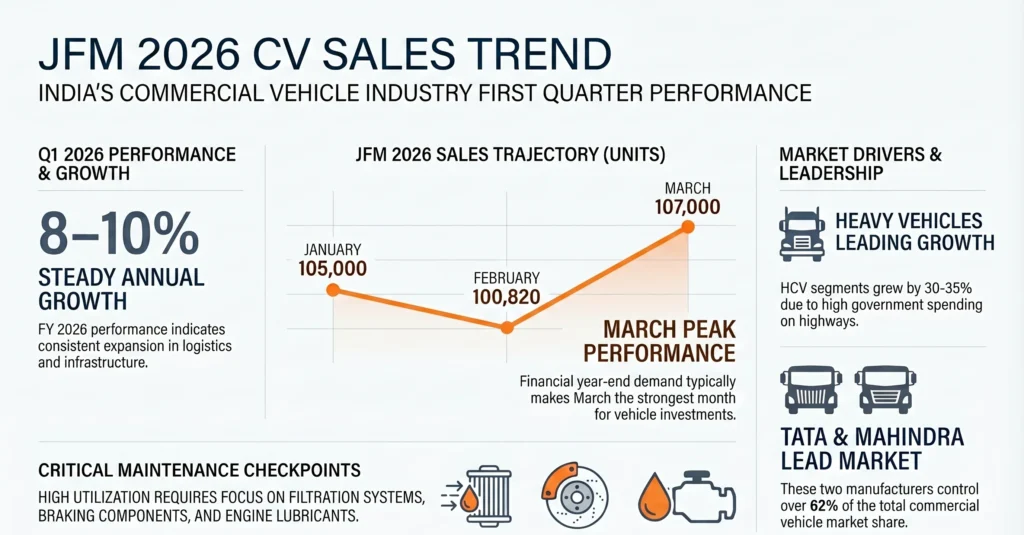
Looking beyond a single month, FY 2026 has delivered consistent growth of around 8–10%, reflecting the overall strength of India’s logistics, infrastructure, and transportation ecosystem.
For fleet owners, this growth brings both opportunity and pressure. As more vehicles hit the road, the focus shifts from just expansion to efficient fleet management, uptime, and maintenance readiness.
Overall CV Sales Performance
March 2026 witnessed a noticeable increase in commercial vehicle sales compared to February, mainly due to financial year-end demand:
Monthly Performance (March 2026)
- Total CV Sales: ~1.05–1.10 lakh units
- YoY Growth: ~6% to 8%
- MoM Trend: Strong increase compared to February (data)
- MoM Growth: +15.12%
Full-Year Performance (FY 2026)
- Total CV Sales: 10,60,906 units
- YoY Growth: ~8% to 10%
This consistent growth indicates that the CV industry is not just recovering but expanding steadily.
Quarterly Performance (Jan–Feb–March 2026)
The January–February–March (JFM) quarter provides a more accurate view of market momentum, as it captures both seasonal dips and year-end spikes.
- January 2026: 1,05,000 – Strong start to the quarter with steady demand
- February 2026: 1,00,820 – Slight dip due to fewer days (seasonal effect)
- March 2026: 1,07,000 – Strong rebound driven by financial year-end purchases
Quarter Insight
Overall, the JFM quarter reflects stable growth with a strong finish, indicating sustained demand rather than short-term spikes.
What this means for fleet owners:
- Demand is consistent, not volatile
- March surge is planned buying, not sudden growth
- Fleet utilization remains high throughout the quarter
Why March Is the Strongest Month?
March is consistently the strongest month for commercial vehicle sales in India. This surge is driven by:
- Financial Year Closing: Businesses invest in vehicles to optimize tax benefits
- Fleet Expansion Planning: Companies prepare for the upcoming financial year
- Higher Freight Demand: Increased movement of goods across sectors
What this means for fleet owners:
This seasonal spike leads to higher vehicle utilization, which directly increases wear and tear making preventive maintenance even more critical.
Why Commercial Vehicle Demand Is Growing
The growth in FY 2026 is driven by three major structural factors:
- Logistics & E-commerce Expansion
- Rising demand for last minute delivery
- Growth in warehouse-to-consumer movement
- Infrastructure Development
- High government spending on highways and construction
- Increased demand for heavy-duty trucks
- Fleet Modernization
- Replacement of old vehicles
- Better fuel efficiency and compliance
Which Commercial Vehicle Segment Is Growing the Most?
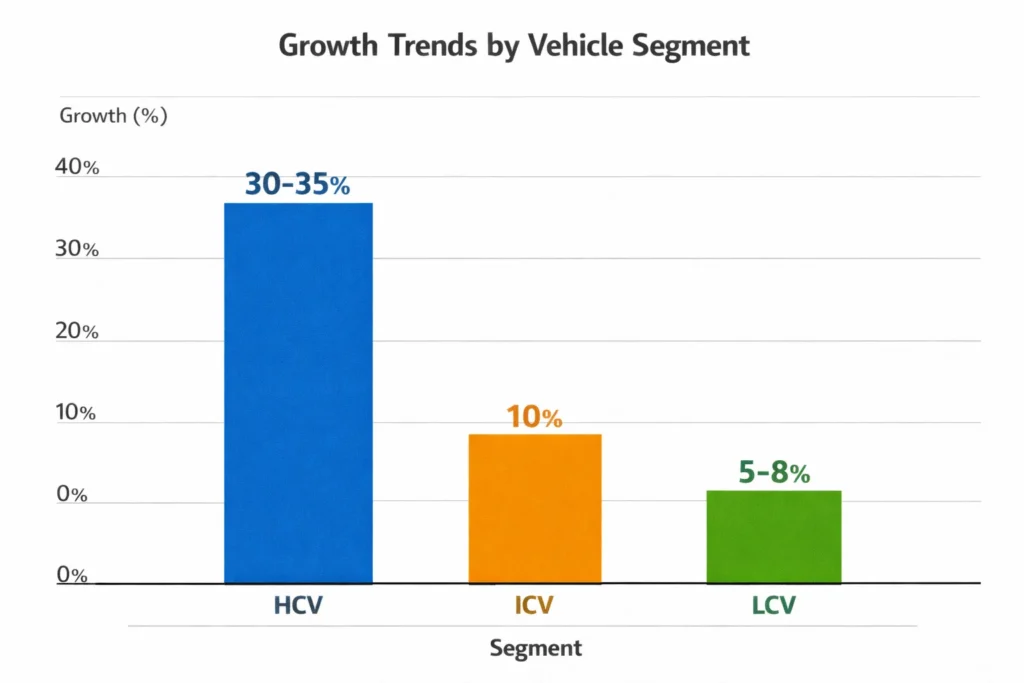
While the overall market is growing, not all segments are expanding at the same pace. FY 2026 data clearly shows that heavy commercial vehicles are leading the growth:
Segment | Market Share | Growth Trend |
HCV (Heavy Commercial Vehicles) | ~32–35% | ~30–35% growth |
ICV (Intermediate CV) | ~8–10% | ~10% growth |
LCV (Light Commercial Vehicles) | ~55–58% | ~5–8% growth |
Heavy commercial vehicles are seeing the fastest growth due to rising demand in infrastructure and long-haul logistics. Light commercial vehicles, on the other hand, continue to dominate in volume because of their role in last-mile delivery.
For fleet managers, this shift is important. Higher usage of heavy vehicles means increased stress on critical components such as braking systems, cooling systems, and lubricants, making preventive maintenance essential.
Fuel Reality Check: Why Diesel Still Dominates
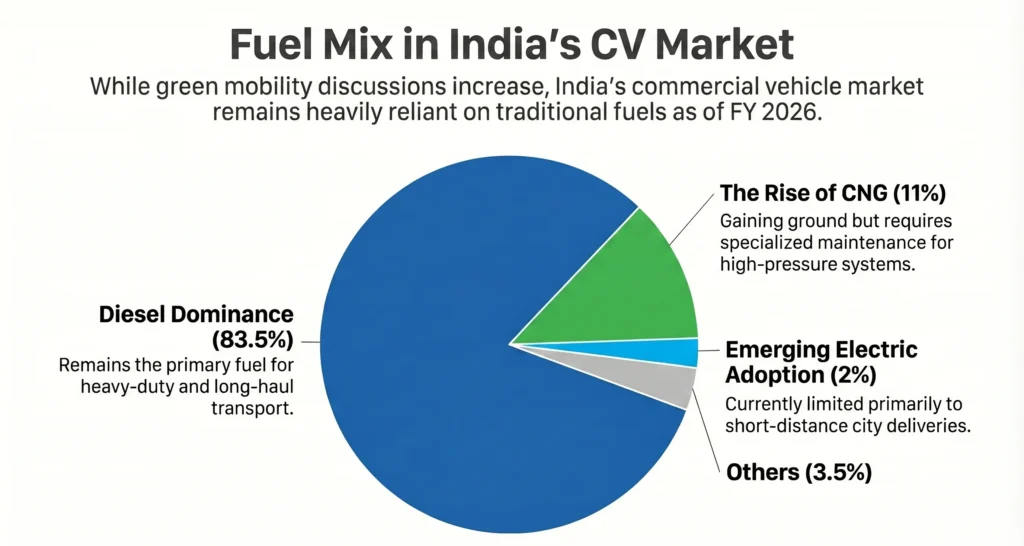
Despite growing discussions around electric mobility, diesel continues to dominate the commercial vehicle segment in India.
- Diesel: ~83.5%
- CNG: ~11.0%
- Electric (EV): ~2.0%
- Others: ~3.5%
While EVs are slowly growing, they are mainly used for short-distance, city deliveries. For heavy-duty and long-haul transport, diesel continues to be the primary fuel. CNG vehicles, with an 11% share, are also important but require specific maintenance, such as specialized spark plugs and high-pressure fuel system components.
What this means for fleet owners:
Diesel vehicles will continue to dominate operations in the coming years. This makes it essential to focus on:
- Diesel engine spare parts
- High-quality lubricants
- Regular maintenance for long-haul performance
Rural vs Urban Demand: Where Is the Real Growth?
A major trend emerging in FY 2026 is the faster growth of rural demand compared to urban markets. This shift is gradually changing the dynamics of the logistics industry across India.
This growth is mainly driven by three key factors:
- Agricultural Logistics: The movement of goods from farms to markets is becoming more organized and efficient, increasing the demand for commercial vehicles in rural areas.
- Rising Rural Consumption: Demand for consumer goods is increasing in non-metro regions, leading to more frequent deliveries and higher vehicle usage.
- Growth of Small Fleet Operators: More entrepreneurs in Tier-2 and Tier-3 cities are entering the transport business, adding new vehicles to the market.
Rural and semi-urban areas are becoming major growth drivers. Expanding operations beyond metro cities can open up new business opportunities and increase revenue.
Who Is Leading the Market? CV Market Share Breakdown
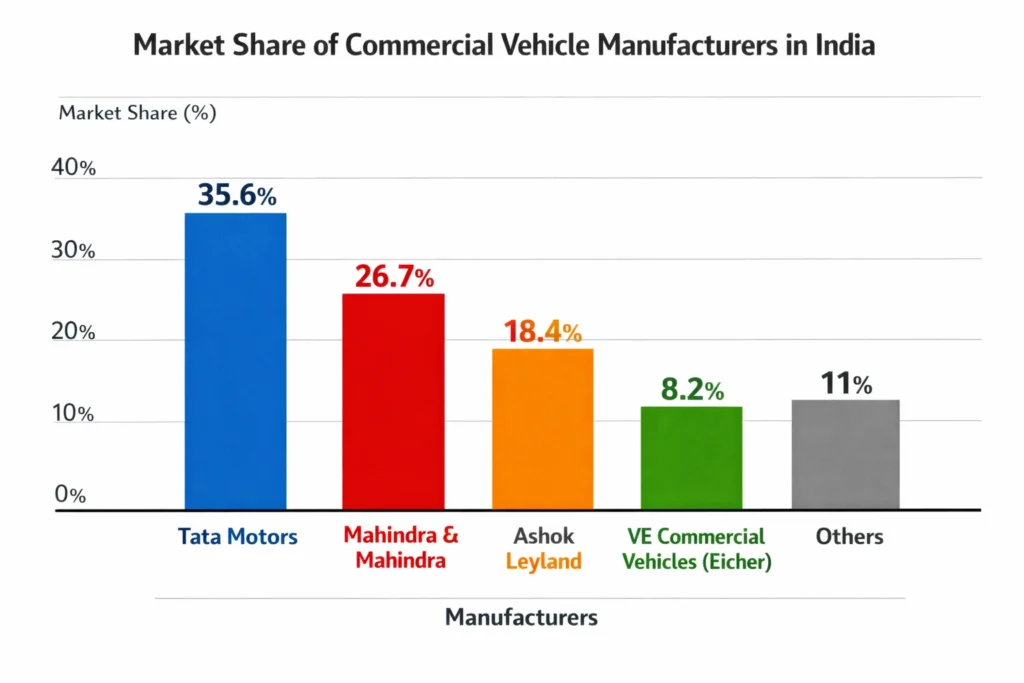
The Indian commercial vehicle market is dominated by four major players. For fleet owners, focusing on these brands makes it easier to manage spare parts and reduce maintenance delays.
Market Share of Leading CV Manufacturers:
- Tata Motors: ~35.6%
- Mahindra & Mahindra: ~26.7% (major contribution by LCV vehicles)
- Ashok Leyland: ~18.4%
- VE Commercial Vehicles (Eicher): ~8.2%
- Others: 11%
Together, these companies control over 88% of the market, making them the main focus for fleet operations.
Standardizing your fleet around these major brands helps:
- Ensure easy availability of spare parts
- Reduce repair and maintenance time
- Improve overall vehicle uptime
Having reliable access to genuine spare parts for these brands is one of the most effective ways to keep your vehicles running smoothly and avoid delays.
Maintenance & Spare Parts: Your Competitive Advantage
As commercial vehicle sales grow, the demand for maintenance and servicing also increases. More vehicles on the road and higher usage mean faster wear and tear, making maintenance more important than ever.
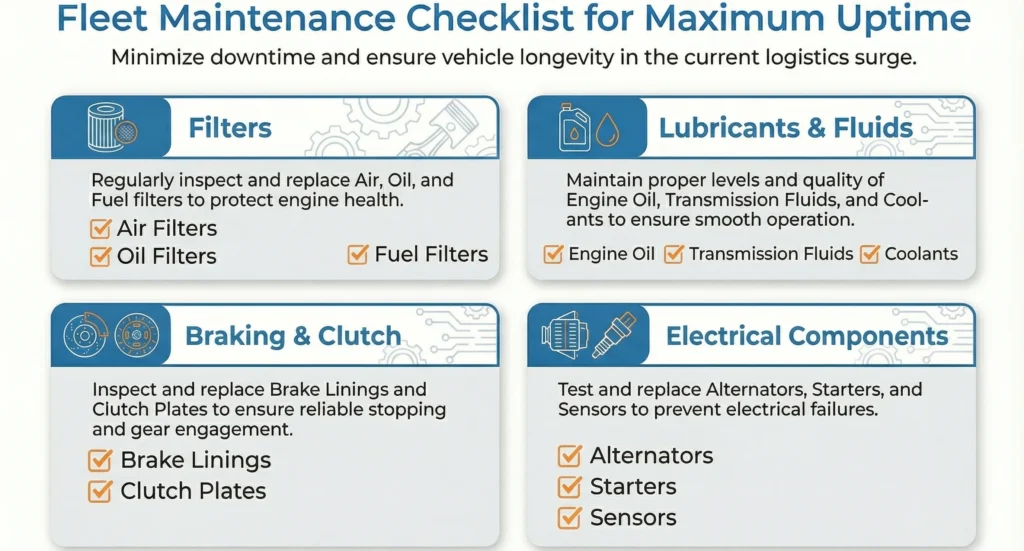
Key Spare Parts Every Fleet Manager Should Focus On
- Filtration Systems: Air Filters , Oil Filters, and Fuel Filters need to be replaced regularly especially in dusty conditions to maintain engine performance and fuel efficiency.
- Heavy-Duty (HCV) Components: With the rise in heavy trucks, demand for parts like brake linings and air suspension systems is increasing. Delays in these parts can directly impact operations.
- Electrical & Sensors: Modern vehicles depend on electronics. Keeping essential parts like alternators, starters, and sensors in stock helps avoid unexpected breakdowns.
- Lubricants & Fluids: High-quality lubricants protect engines during long-haul trips and reduce long-term damage and repair costs.
What this means for fleet owners:
A strong spare parts strategy is no longer optional, it’s a competitive advantage. Having the right parts available at the right time helps:
- Reduce downtime
- Improve vehicle uptime
- Avoid costly delays
Digital platforms are making it easier for fleet owners to access genuine spare parts quickly, helping reduce downtime and improve operational efficiency.
Market Outlook: What to Expect in the Coming Months
Looking ahead, dealer sentiment remains cautiously optimistic. Around 49.81% of dealers expect growth in the next quarter (Apr–Jun 2026), indicating steady demand despite short-term uncertainties.
For the longer term, the outlook for FY 2027 remains positive, with 74.7% of dealers expecting growth in the 3–7% range, suggesting continued expansion in the commercial vehicle market.
However, some key risks remain:
- Economic slowdown (40.5%)
- OEM supply disruptions (30.5%)
- Fuel price volatility (14.9%)
What this means for fleet owners:
While demand is expected to remain stable, fleet operators should prepare for potential cost pressures and supply delays by focusing on efficient operations and proactive maintenance strategies.
Conclusion: Preparing for the Road Ahead
The Indian commercial vehicle industry is on a strong growth point, supported by infrastructure development, rising rural demand and expanding logistics networks. The combination of steady FY 2026 growth and the March sales peak clearly indicates increasing pressure on fleet operations.
The real winners in this evolving market will not be those with the largest fleets, but those with the most reliable and well-maintained vehicles. By focusing on these, fleet owners can reduce downtime, control costs and stay ahead in the competitive logistics industry.
- Smart spare parts sourcing
- Preventive maintenance
- Efficient operations
Looking for reliable spare parts for your fleet? MyMotoCo offers genuine products, fast delivery, and a seamless ordering experience, helping you keep your vehicles running without delays.
Source: Federation of Automobile Dealers Associations – March 2026 & FY 2026 Retail Data