
Importance of Vehicle Filters: Air, Oil & Fuel Filter Guide
When it comes to keeping your vehicle’s engine healthy, automobile filters play a bigger role than most drivers realize. From ensuring clean airflow to delivering pure fuel and maintaining proper lubrication, filters are essential components that protect your engine from damage.
In this guide, we’ll break down the types of automobile filters, explain their functions, and help you understand the overall importance of vehicle filters for long-term engine protection.

Why Automotive Filters Matter
Engine filters act as preventing contaminants from entering sensitive engine components. This reduces wear and tear, prevents breakdowns, and improves performance. Whether you drive a car, van, or commercial vehicle, using the right filters for engine protection is crucial for engine efficiency and durability.
Quick Fact: A clogged filter can reduce engine performance by up to 15–20%, affecting mileage, pickup, and overall health!
Types of Automotive Filters and Their Roles
1. Air Filter
Role of the Air Filter
The air filter ensures clean airflow into the engine for combustion. Dust, dirt, and debris can severely damage the cylinders if the air is not filtered properly.
Air Filter Functions:
- Removes dust & pollutants
- Protects cylinders
- Improves fuel combustion
- Supports better mileage
A clean air filter is important to maintaining engine performance, especially in dusty Indian road conditions.
Fun Fact: Your engine needs more than 10,000 liters of air to burn just one liter of fuel—so a clean air filter becomes extremely important!
2. Oil Filter
Role of the Oil Filter
The oil filter removes impurities from engine oil, ensuring smooth lubrication of moving parts.
Oil Filter Functions:
- Filters carbon deposits
- Prevents engine wear
- Maintains oil flow
- Extends engine life
Since engine oil circulates constantly, impurities can accumulate fast. That’s why regular filter replacement for the oil filter is a must.
3. Fuel Filter
Role of the Fuel Filter
The fuel filter ensures only clean fuel reaches the injectors, preventing clogging and improving combustion efficiency.
Fuel Filter Functions:
- Removes rust, dirt & moisture
- Protects injectors
- Prevents starting issues
- Maintains fuel efficiency
A bad fuel filter can cause misfiring, low pickup, and poor mileage.
Automobile Filter Comparison: Which One Is Most Important?
Many drivers want to know which filter matters the most. The truth is: all automotive filters work together, and ignoring even one can harm the engine.
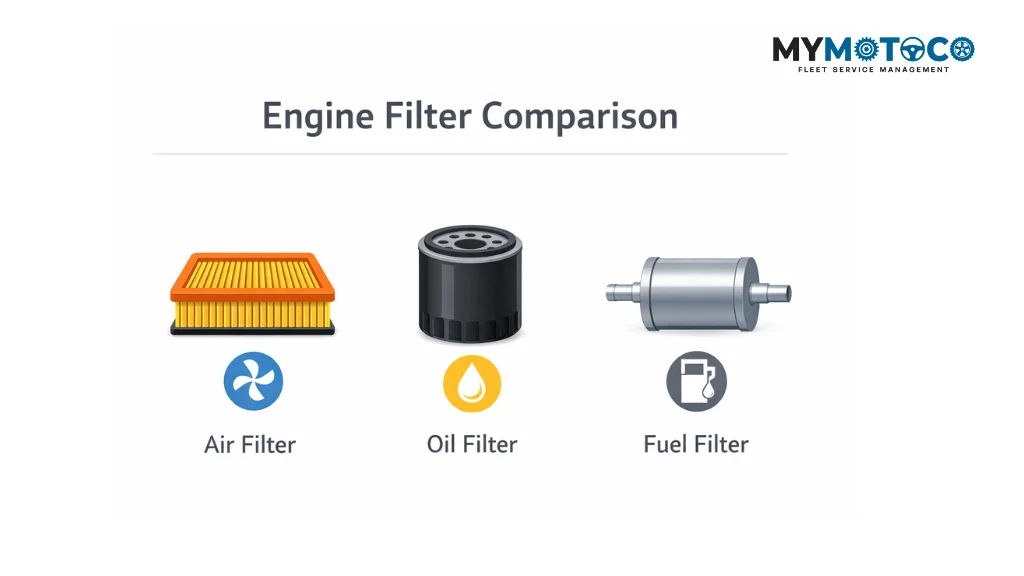
Here’s a quick Automotive filter comparison:
Filter Type | Main Job |
Air Filter | Provides clean air for combustion |
Oil Filter | Keeps engine oil clean |
Fuel Filter | Prevents impurities from reaching injectors |
While all three are crucial, the oil filter and fuel filter have slightly higher importance because they directly affect engine internals and injectors.
Pro Tip: Replace your fuel and oil filters at every service interval to avoid expensive injector or engine repairs later.
Importance of Vehicle Filters for Long-term Engine Health
Regular maintenance of filters ensures:
- Better engine performance
- Improved fuel economy
- Longer engine life
- Lower repair costs
- Cleaner emissions
This is why understanding the role of vehicle filters and keeping them in good condition is essential for every driver.
For buying genuine air, oil, and fuel filters for commercial and personal vehicles, MyMotoCo is one of the most trusted platforms offering high-quality automotive filters at competitive prices.
When Should You Replace Your Engine Filters?
Here are general recommendations:
- Air Filter Replacement: Every 15,000–20,000 km
- Oil Filter Replacement: With every oil change
- Fuel Filter Replacement: Every 10,000–15,000 km
Driving in dusty areas, heavy traffic, or with commercial loads may require more frequent replacement.
Conclusion
Understanding the different types of automobile filters and their functions helps you maintain better engine health and performance. Whether you’re focusing on filters for engine protection or evaluating which filter is most important, the answer is simple: every filter matters.
Regular filter replacement, quality parts, and timely servicing can significantly improve your vehicle’s lifespan. And if you’re looking for genuine BS6 and non-BS6 filters, MyMotoCo offers a wide range of reliable, high-quality options for all vehicle types.
Frequently Asked Questions (FAQs)
The important automobile filter depends on the vehicle type, but in most cases, all filters play a crucial role. Air, oil, and fuel filters work together for engine protection and smooth performance.
The importance of vehicle filters lies in their ability to keep dirt, dust, carbon, and impurities away from the engine. Clean filters improve mileage, reduce wear, and extend engine life.
The major types of automobile filters include the air filter, oil filter, and fuel filter. Each one has a specific role and keeps different contaminants away from the engine.
Regular filter replacement is recommended every 10,000–15,000 km depending on the vehicle type, driving conditions, and usage pattern.
An automotive filter comparison helps you choose the right filter type for your vehicle. It ensures better engine health and long-term reliability.